Why a platform won’t fix it
When a bid you should have won slips, or a customer disputes a change order, the instinct is to buy a platform. But the gap is rarely missing software; it’s handoffs between people that were never written down. The review names the handoffs quietly costing you bids, change orders, and disputed-work exposure.
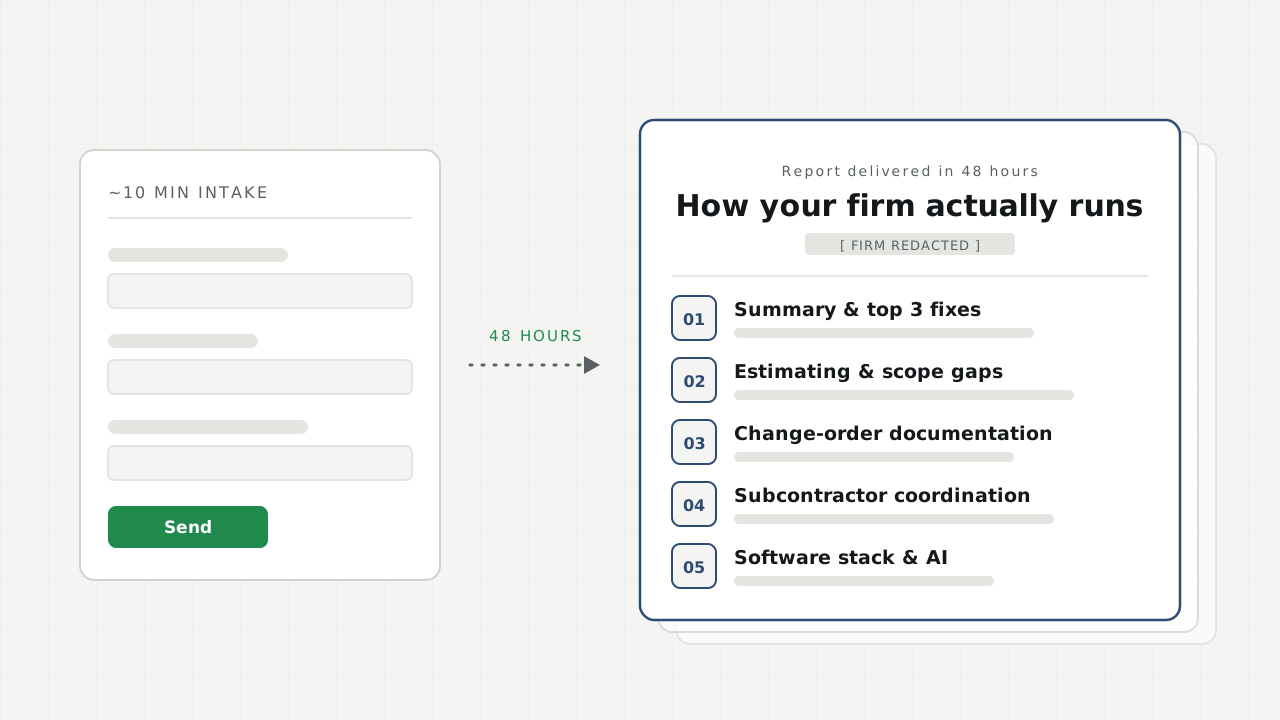
What you send
About ten minutes of intake covering how your operation runs: bid volume, typical contract size, software, where friction shows up. No project names, sub rates, contract amounts, or financials. The form is structural, not factual.
What you get back in 48 hours
Summary and top three recommendations
The three findings most worth your attention, each with the specific next action.
Estimating and scope-gap exposure
The language patterns behind the bids you lose and the jobs that go over.
Change-order documentation
How verbal approvals turn into disputes, and the minimum paper trail that holds, sized to your contracts.
Subcontractor coordination
Where one late sub cascades, who owns the schedule, and what happens to project history when a sub leaves.
Software stack and AI
What your tools overlap on, where the gaps are, and where AI saves time versus adds risk.
Excerpt · 03 Change order documentation
Change orders under $250K are approved by text per your intake, which is risky. Most prime contracts treat a signed change order as the only enforceable document; a text thread (like yours) loses credibility when scope or amount is disputed.
The fix is to follow each approval within 24 hours with a one-page PCO emailed for signature. Free tools close the gap without slowing you down. This keeps your workflow fast while giving you the legal protection you need.
Every finding names the pattern, the exposure, and the minimum upgrade that holds.
What this is not
Not project management software, not a takeoff tool, and not legal advice. We flag the documentation patterns that lose disputes; the call on your specific contract belongs to you and your construction lawyer.